




We are deeply concerned that in the lead up to crucial elections, an investment fund with documented links to President Vučić has seized control of Serbia’s last independent news outlets.
 „Oni su silovateljsko-sektaška lista”: Šta piše u izveštaju o TV Informer zbog kojeg je Vučićević napao analitičarku REM-a
  Dragojlo o intervjuu sa članom SNS: Marjanovićeva ispovest razara partokratiju SNS-a iz prve ruke
  Ratko Femić: Dobili smo okupacionog, oktroisanog urednika
  Bojana Anđelić, izvršna urednica Nova.rs: Umorni smo, ali rešeni da istrajemo
  Savet REM-a nije doneo nijednu odluku po prijavama protiv Informera
 We are deeply concerned that in the lead up to crucial elections, an investment fund with documented links to President Vučić has seized control of Serbia’s last independent news outlets.

Answers needed amidst pending regulatory scrutiny of takeover of major regional media network by Orbán-connected investment group

The European Federation of Journalists (EFJ), together with the Balkan Free Media Initiative (BFMI) and Article 19 Europe, today sent a letter to the European Board of Media Services (Media Board). We reiterated serious concerns regarding the proposed sale of the Adria News Network to Alpac Capital/European Future Media Investment and formally requested immediate regulatory scrutiny under applicable European media transparency, competition and media pluralism frameworks.
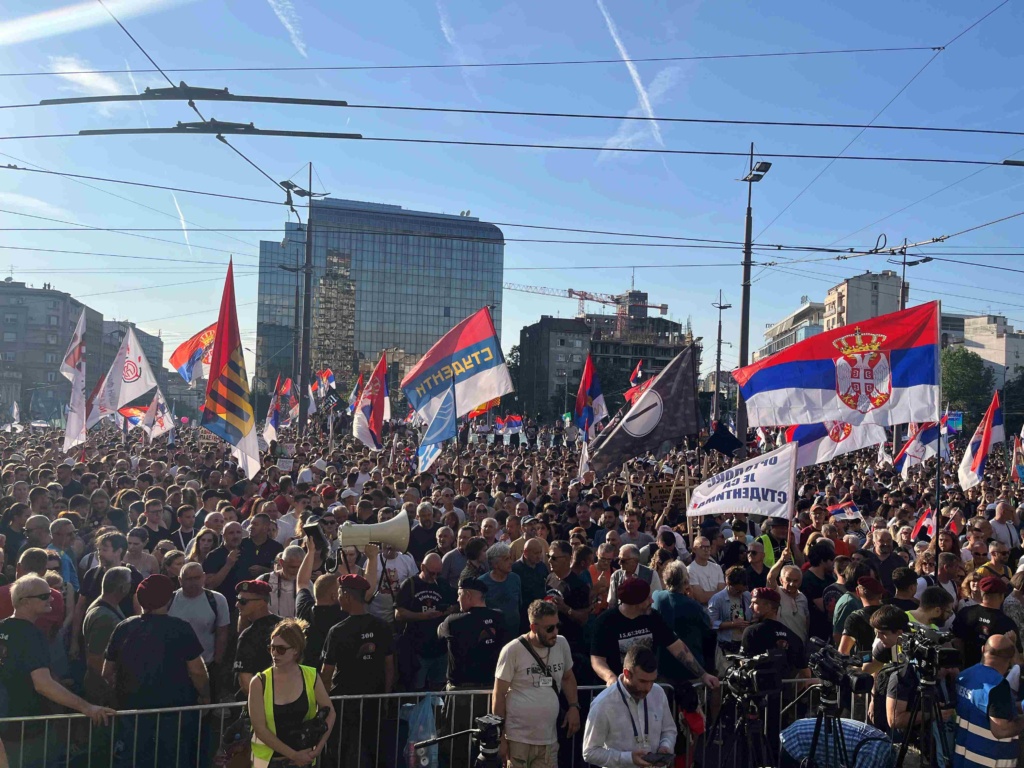
Mission findings and reccomendations published following visit to Belgrade, which was joined by IPI
The undersigned media freedom and journalist organisations stand in full solidarity with the Slavko Ćuruvija Foundation, which has been ordered to pay over one million dinars (€8,812) in damages in a defamation case brought by those acquitted of the murder of the Serbian editor and newspaper founder, Slavko Ćuruvija. For 27 years, the Slavko Ćuruvija Foundation has fought for justice for the assassination of Ćuruvija, who was gunned down outside his apartment in Belgrade in 1999.
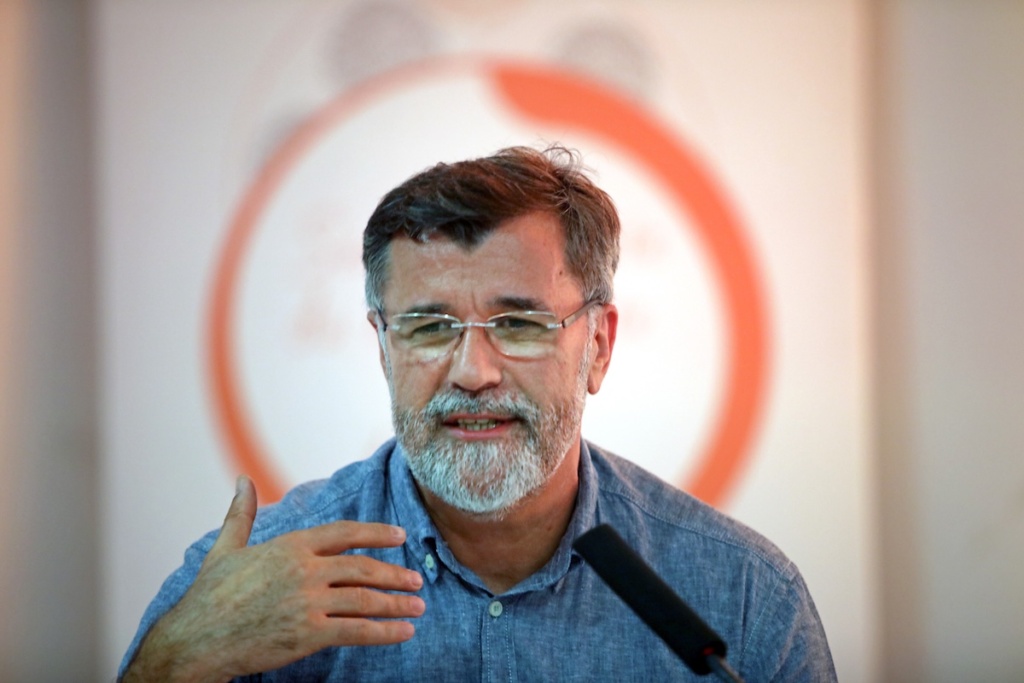
Although he was executed on Easter Sunday in 1999, during the NATO bombing campaign, by members of the very service tasked with protecting state security, the still-unsolved murder of Slavko Ćuruvija continues to painfully demand answers to numerous questions. Until 2014, the investigation itself was obstructed precisely by members of that service, which, in addition to murdering journalists, also killed former Serbian President Ivan Stambolić, Prime Minister Zoran Djindjić, and many others.
EU Member States must show political leadership and join calls for the suspension of EU funds to Serbia to prevent the spiral of violence against journalists from escalating into deadly attacks, the European Federation of Journalists (EFJ) and nine undersigned organisations said on Friday in a series of letters sent to a group of Ministers…
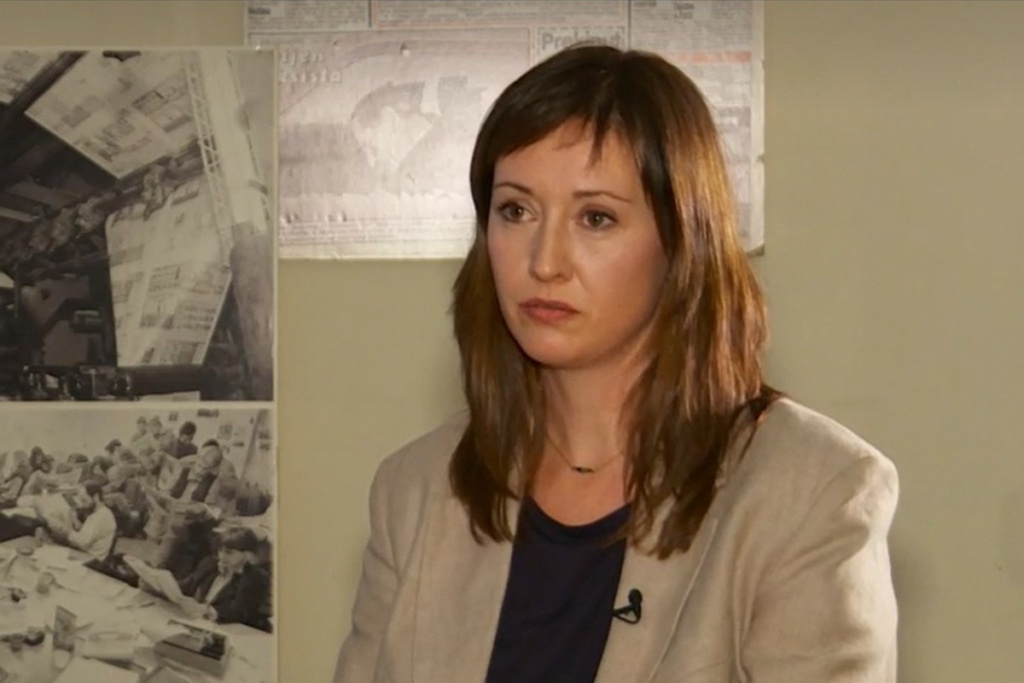
On April 11, 1999, Slavko Ćuruvija, the owner of Serbia’s first private daily newspaper, Dnevni Telegraf, was assassinated outside his home in the capital, Belgrade. After a decades-long pursuit of accountability, the case reached a turning point in February 2024 when the Belgrade Court of Appeal issued a final, non-appealable acquittal for four former Slobodan Milošević-era state security officers who were previously found guilty of the murder. Although the Serbian Supreme Court ruled in January 2026 that this acquittal was based on “serious legal violations” and misrepresented evidence, the verdict remains legally binding due to procedural protections. Today, the case is stalled in a state of complete impunity.
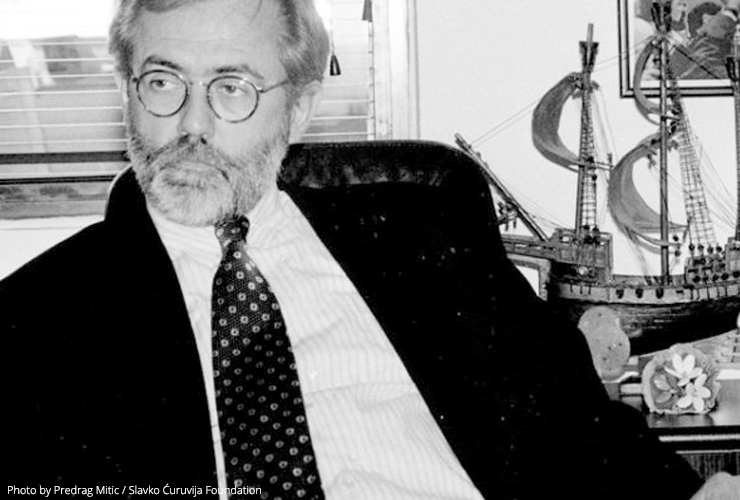
11 April 2026 marks twenty-seven years since the unpunished murder of Slavko Ćuruvija, a prominent Serbian journalist and the publisher of Dnevni Telegraf and Evropljanin. As the Latin phrase goes, ‘Fiat justitia ruat caelum’: 'Let justice be done, though the heavens fall'. But what can we say when there is no justice and the sky has fallen on everyone in Serbia? We are living in a state of criminal anarchy and unprecedented violence.
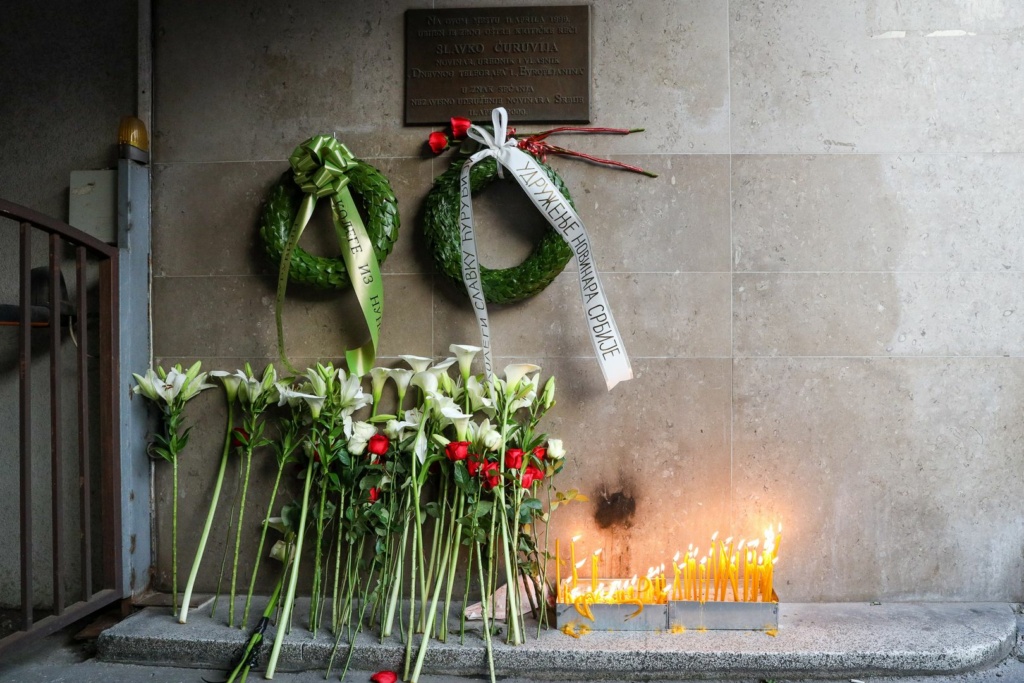
Twenty-seven years after the assassination of Serbian newspaper publisher and editor Slavko Ćuruvija in Belgrade, IPI today joins the undersigned media freedom organisations in marking the upcoming anniversary of the killing by lamenting the complete impunity for those responsible for one of the most serious attacks on journalism in the country’s history.
Media freedom in Serbia remains trapped in a downward spiral amidst record levels of physical violence against journalists, death threats and online smear campaigns, alarming levels of impunity, and tight political control over the media landscape, a coalition of media freedom organisations concluded.
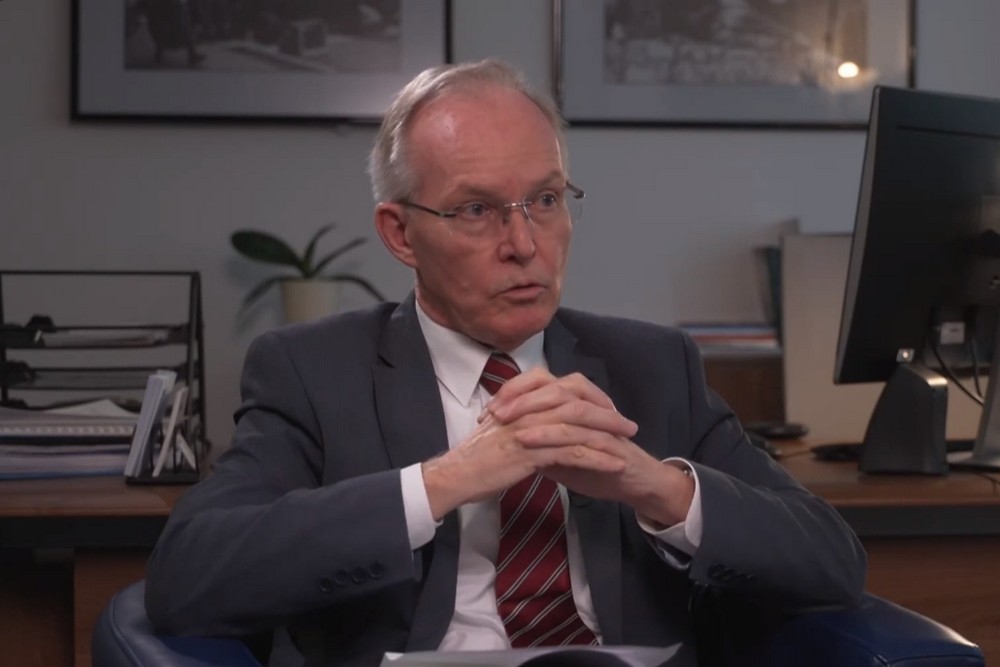
The representative of the Organization for Security and Co-operation in Europe (OSCE) for media freedom, Jan Bratu, assessed that there was an "unprecedented level of violence and intimidation of journalists" during the local elections on Sunday in Serbia and called on the Serbian authorities to condemn it "publicly and unambiguously."
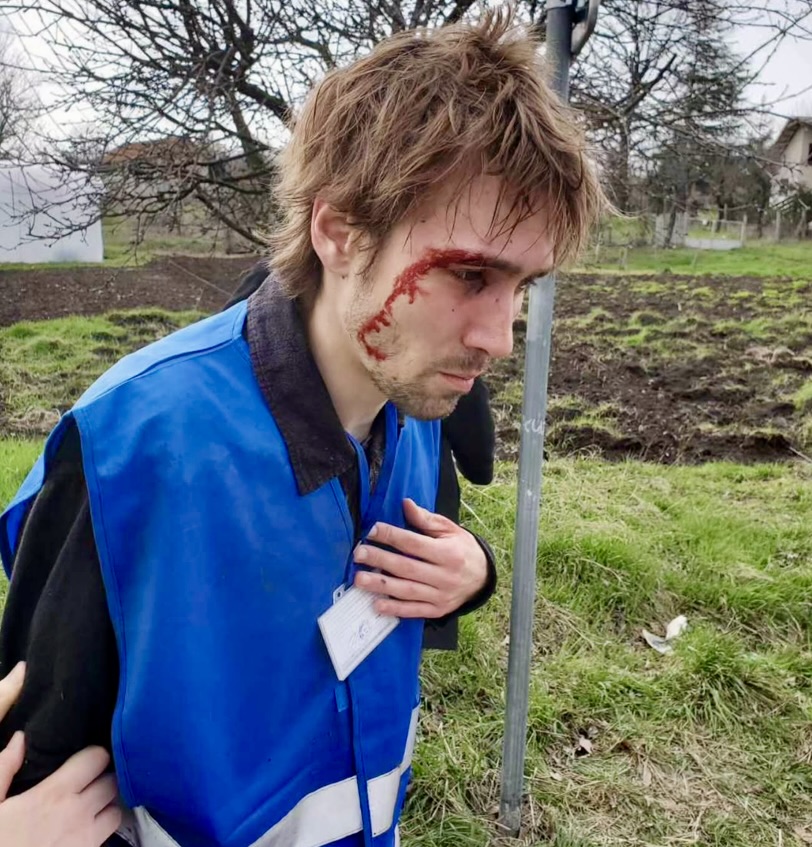
During the local elections in Serbia on 29 March, multiple obstructions and physical attacks on journalists by unknown individuals were documented in 10 cities and municipalities, despite them being identified as press. The European Federation of Journalists (EFJ) and the SafeJournalists Network (SJN) strongly condemn the violence inflicted on journalists and urgently call on law…
IPI today joins its partners in the Media Freedom Rapid Response (MFRR) in expressing renewed concern over the undemocratic process by which the National Assembly conducted the latest election for the Council of the Regulatory Authority for Electronic Media (REM), Serbia’s key media regulator.
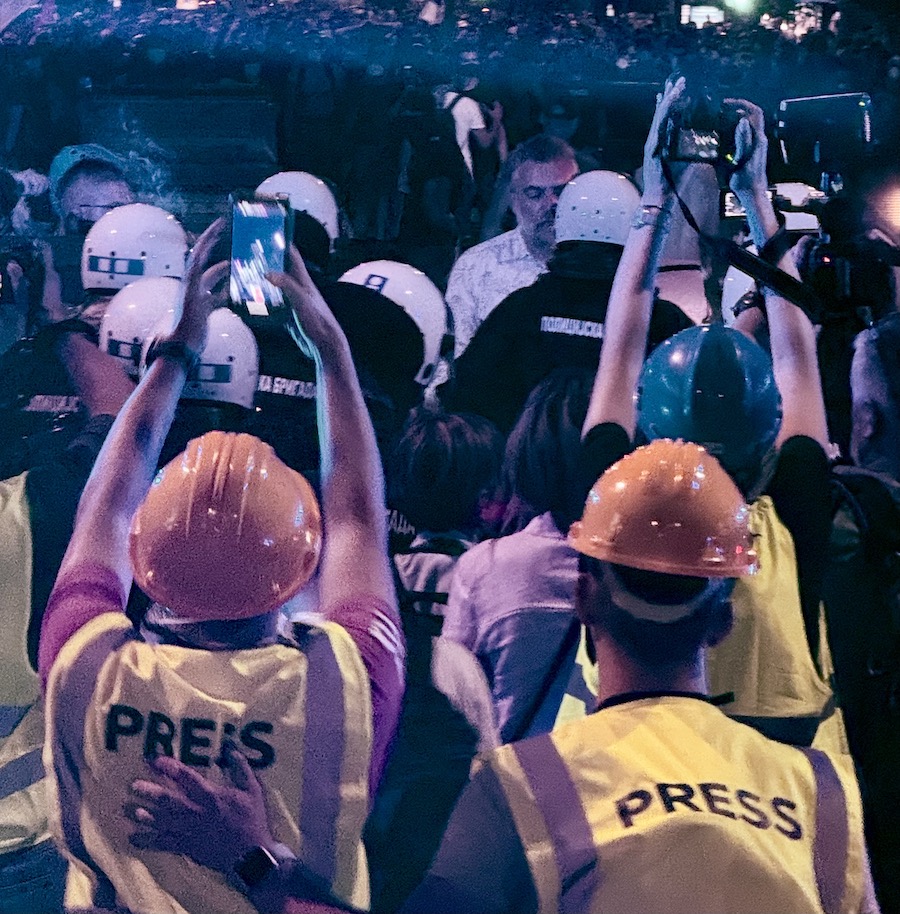
Nearly a year after the start of the protests — sparked by the deadly collapse of the canopy of a railway station in northern Serbia on 1 November 2024 — journalists covering them continue to be targeted. Media professionals have suffered at least 89 physical attacks in one year, a record. Reporters Without Borders (RSF) is supporting the Independent Journalists’ Association of Serbia (NUNS) with financial and technical assistance to provide protective equipment.

Violence against journalists in Serbia — which Reporters Without Borders (RSF) has repeatedly warned about — has reached a sad new record. RSF has documented 34 physical attacks committed in less than two months against media professionals by both political activists and law enforcement while they reported on anti-corruption protests. This figure exceeds all annual totals of physical assaults recorded in Serbia since at least 2020. RSF calls on European Union (EU) member states and the European Parliament to send a clear message to the Serbian authorities that their passive stance – and potential complicity – in these abuses is incompatible with their goal of joining the EU.
United Group's flagship Serbian TV channel N1 has been an outlet for opposition voices amid mass anti-government protests.
Journalists covering recent clashes face violence from police and government supporters while reporting
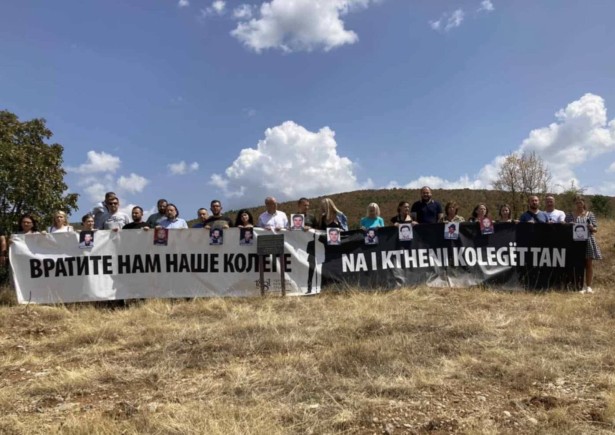
Can we commemorate the victims of crimes of the past, even as we turn a blind eye to the crimes against journalists of the present? This is the fundamental question. The answer will determine our future. On that hot and sticky August morning, the 21st of the month, 1998, Radio Priština journalists Đuro Slavuj from Dvor on the Una and Ranko Perenić from Lipljan went to the Sveti Vrači monastery in Zočište, in western Kosovo, to report on the return of kidnapped monks. They have been missing ever since.

Journalistic and media organizations from Serbia and the region strongly condemned the attacks on journalists and media workers during protests, noting that numerous physical assaults and destruction of equipment were recorded at the Wednesday evening protest, including six incidents involving police officers, the Independent Journalists’ Association of Serbia (IJAS/NUNS) said on Thursday.