



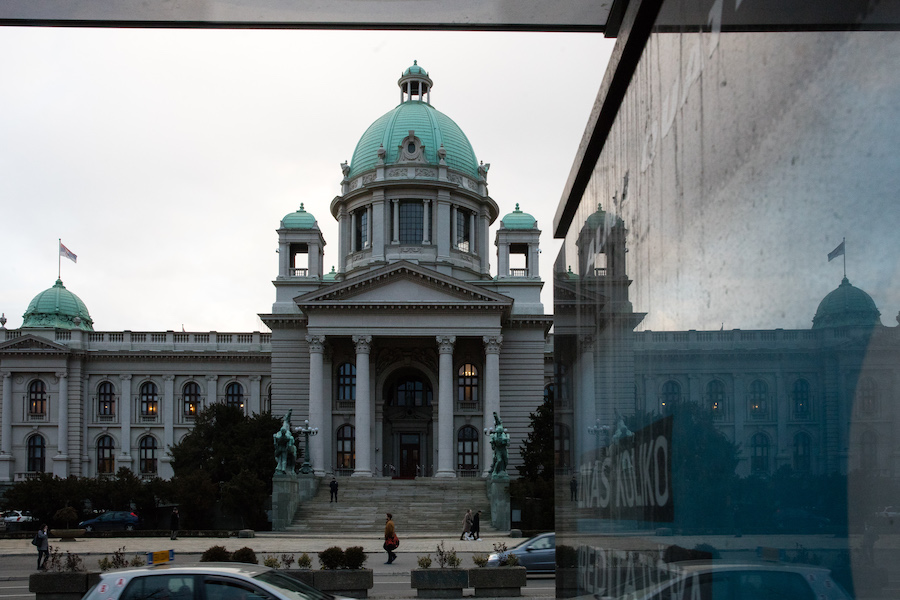
The partner organisation of the Media Freedom Rapid Response (MFRR) will conduct a mission to Serbia between 7-9 April to meet with journalists, media stakeholders and law enforcement authorities amidst a rapidly worsening media freedom crisis.
 „Oni su silovateljsko-sektaška lista”: Šta piše u izveštaju o TV Informer zbog kojeg je Vučićević napao analitičarku REM-a
  Dragojlo o intervjuu sa članom SNS: Marjanovićeva ispovest razara partokratiju SNS-a iz prve ruke
  Ratko Femić: Dobili smo okupacionog, oktroisanog urednika
  Bojana Anđelić, izvršna urednica Nova.rs: Umorni smo, ali rešeni da istrajemo
  Savet REM-a nije doneo nijednu odluku po prijavama protiv Informera
 The partner organisation of the Media Freedom Rapid Response (MFRR) will conduct a mission to Serbia between 7-9 April to meet with journalists, media stakeholders and law enforcement authorities amidst a rapidly worsening media freedom crisis.
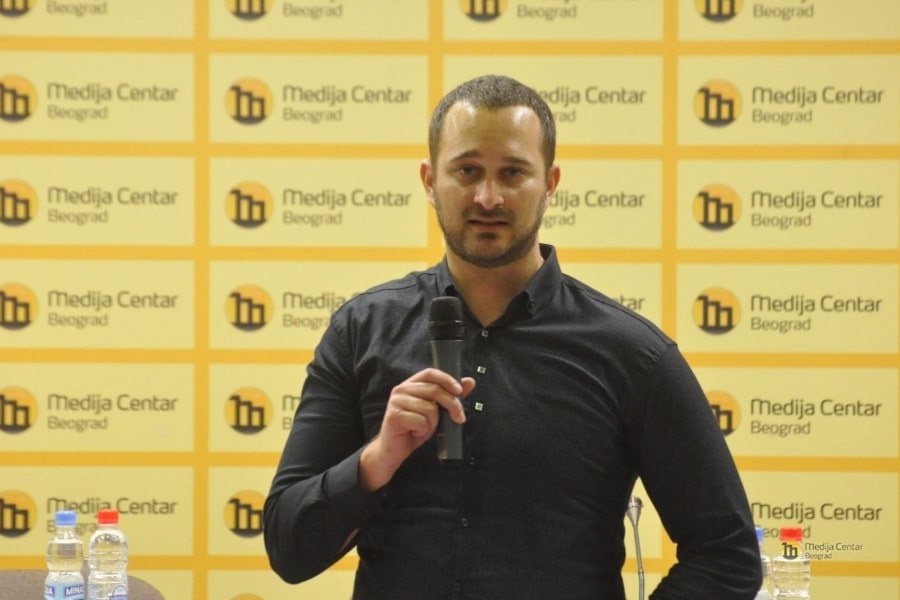
BIRN journalist Sasa Dragojlo was assaulted by a member of the ruling Serbian Progressive Party while covering a protest in Belgrade, but police refused to identify the assailant.
Responding to an N1 reporter’s question on whether a sound cannon was used against protesters during the March 15 protest in Belgrade, Serbian President Aleksandar Vucic said in Brussels that “it was not used by anyone, anywhere.” He accused N1 of employing “tricks and deceptions” and “trying to extend the effects of a color revolution.”
Belgrade University political sciences students declared a regime tabloid their enemy following attacks on a student from Novi Pazar.
An editor at the state Radio Belgrade canceled her show in protest over the alleged use of a sound cannon at the March 15 protest in Belgrade, the Serbian Association of Journalists (UNS) said on Tuesday.
A number of local and international media freedom and journalists’ organizations reacted to the attempt to blockade N1 by activists of the Serbian ruling coalition's junior member party - Deputy Prime Minister Aleksandar Vulin's Movement of Socialists.
Serbian police prevented several journalist teams from Croatia and Slovenia from entering the country on Friday evening.
Serbian President Aleksandar Vucic apologized to the public and the state TV (RTS) for calling an RTS journalist reporting on Saturday’s student protest in Nis an imbecile but implied that the public broadcaster’s reporters are not objective.
One of the NGOs raided on Tuesday as part of investigations into possible misuse of USAID funding said that pro-regime media knew about the raids before they happened.
The Belgrade police raided the offices of two democracy watchdog NGOs under warrants from anti-corruption prosecutors, the Serbian state TV (RTS) reported on Tuesday.

“Once again, independent journalists seeking to inform on nationwide protests in Serbia are the target of the Serbian authorities as well as pro-government media and trolls, who not only prevent them from reporting but vilify them through hateful statements and manipulated videos. We stand with the courageous journalists of Serbia and urge the authorities to ensure their safety” - Ma Thida, Chair of PEN International’s Writers in Prison Committee
Reporters Without Borders (RSF), which contributes to the European Commission's annual report on the rule of law in the European Union (EU), condemns the Commission's persistent inaction as Member States continue to attack press freedom. RSF calls on the Commission to assume its responsibility to enforce its rules and do everything in its power to halt the erosion of press freedom in Europe.
Several journalists have been dismissed and a number of attacks against media professionals have been recorded since wider protests swept across Serbia following a fatal accident at a train station on 1 November 2024. The International Federation of Journalists (IFJ) and the European Federation of Journalists (EFJ) join their affiliates, the Independent Journalists’ Association (NUNS), the Journalists Association of Serbia (UNS) and the Union of Journalists and Media Workers of Serbia (SINOS), in condemning the attacks and calling for justice and accountability.
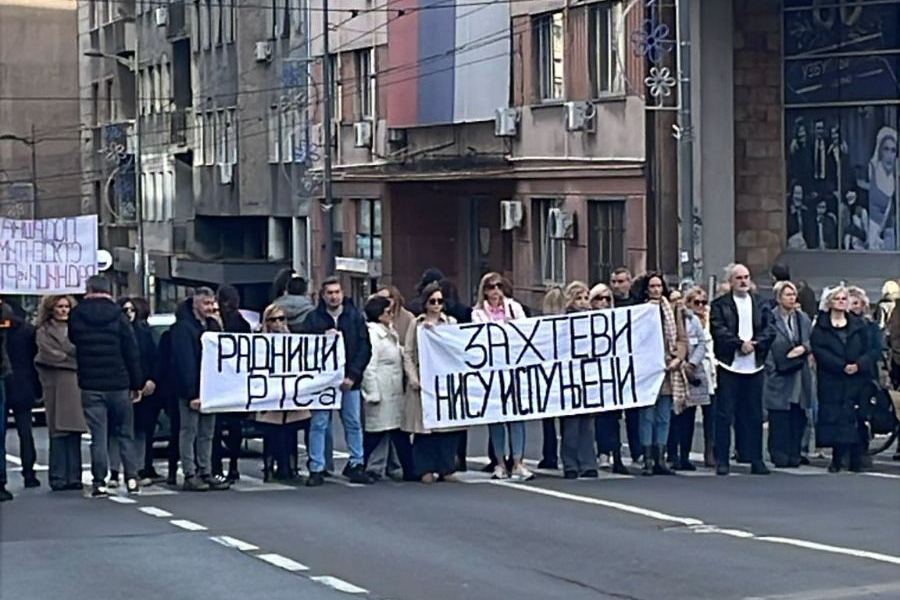
On Monday, Serbian state TV (RTS) staff joined the student protest in Belgrade by blocking traffic outside the RTS headquarters.
The European Federation of Journalists (EFJ) today gave its full support to the Serbian journalists’ organisations which have called for a general strike to take part in the action of “general civil disobedience” organised by Serbian students following the tragic accident at the Novi Sad train station, killing 15 people. The EFJ denounces in particular the threats made by the Serbian Minister of Information and Telecommunications Dejan Ristić against the Serbian Coalition for Media Freedom.
The Cenzolovka media freedom watchdog portal said that Serbian pro-regime tabloids are deleting articles in which they attacked the student protesters in an effort to avoid being shut down.
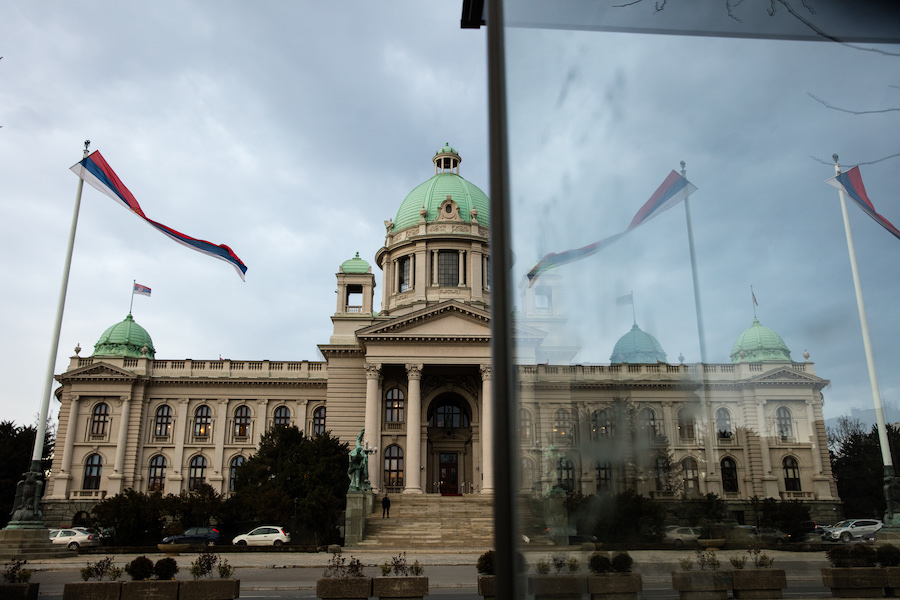
"He who controls the media controls the mind". This catchy quote is from Noam Chomsky, a US professor and intellectual, renowned linguist and social critic. It well describes life in Serbia nowadays. At stake in Serbia today is the independence of the Regulatory Agency for Electronic Media (REM), specifically its Council, which is in the process of re-appointment and whose members are to be selected by the Parliament.
Less than a week after the publication of our joint appeal to the EU to take urgent EU-wide measures, such as stricter regulation of spyware exports and use, new spyware abuse scandal erupts in Serbia: Serbian intelligence services and police have used spyware and other digital tools to hack the phones of journalists and illegally surveil them, Amnesty International said in a report published on Monday.
The International Federation of Journalists (IFJ) insists that national governments are held accountable when journalists are killed or targeted across the world, in particular those in Palestine, Lebanon, Israel, and Syria as a result of the war in Gaza. The appeal comes on 2 November, the 10th anniversary of International Day to End Impunity for Crimes against Journalists.

We, the undersigned members of the Community of Democracies Governing Council, express deep concern over the request for extradition of Belarusian filmmaker and activist Mr. Andrei Gnyot from Serbia. Extradition of democratic activists to the autocratic Minsk regime, which notoriously violates international law, including human rights, undermines the democratic principles enshrined in the Warsaw Declaration, and is incompatible with adherence to the rules-based international order.