




The drafting of the national media strategy has been halted following consultations between President Aleksandar Vučić and Prime Minister Ana Brnabić, announced Vučić’s media advisor Suzana Vasiljević.
English
01. jun 2018.
Crowdfunding campaign to save local weekly
After 20 years of publishing and 1,000 editions, one of the most respected local media outlets in Serbia, news weekly Kikindske – based in the northern Serbian town of Kikinda – recently launched a crowdfunding campaign with the idea of providing the funds necessary to cover printing costs and ensure unhindered editorial work, as well as for “readers to help Kikindske in its fight against censorship”.
English
16. apr 2018.
Désir: Journalists’ security and media strategy crucial
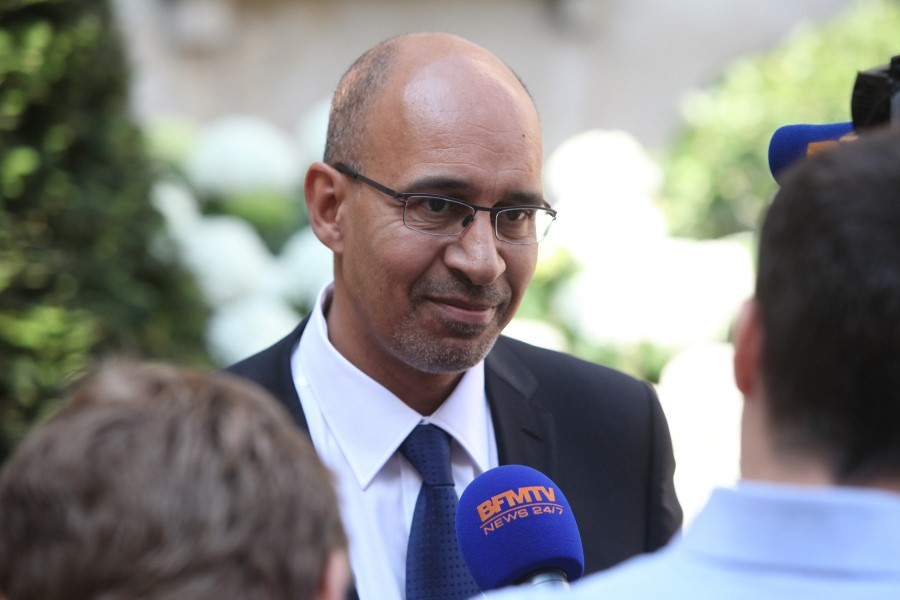
The new OSCE Representative on Freedom of the Media, Harlem Désir, said during a recent visit to Serbia that this organisation is particularly concerned about the safety of journalists in the country, and that it is very important to shed light on attacks and unresolved murders of journalists.
English
16. apr 2018.
Freedom House: Media freedom and democracy on the decline in Serbia
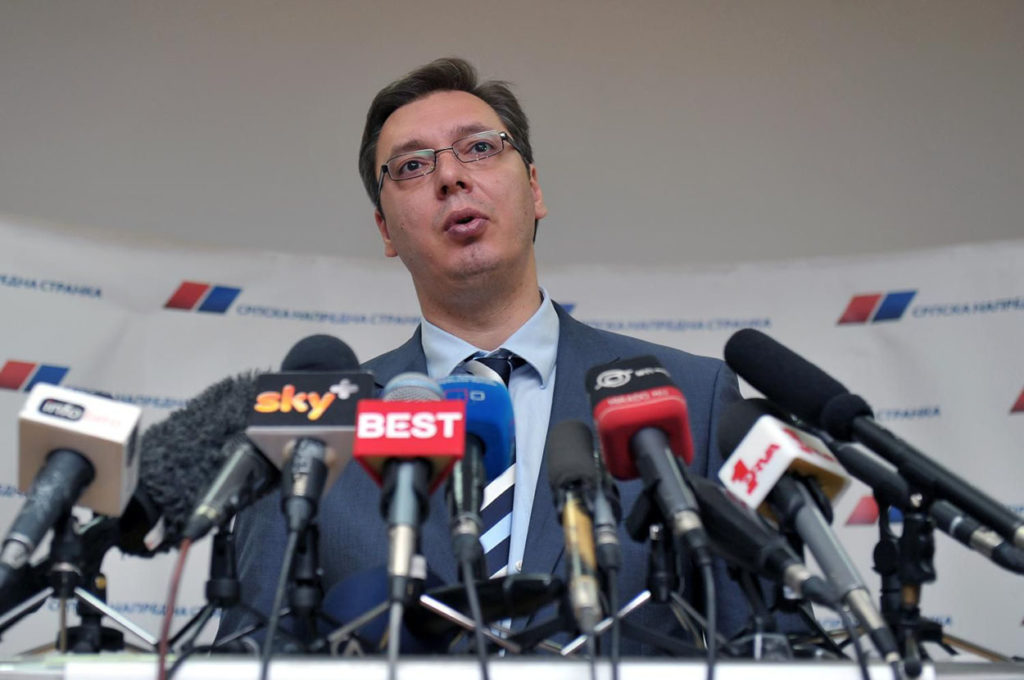
For the fourth consecutive year, the state of democracy in Serbia has deteriorated – on the issues of media independence, the civil sector, state administration and local government, while power is continuing to be concentrated in the hands of President Aleksandar Vučić, according to the latest Freedom House report on countries in transition.
English
16. apr 2018.
Inspections of Southern News Continue
More than five months after the launch of unusually detailed inspections of Južnih vesti – the most popular independent media company in southern Serbia, Prime Minister Ana Brnabić has spoken with the Director of the Tax Administration and stated that checks should be completed in the shortest possible time, in order not to further hinder work, “provided there are no indications that they should be further expanded”, reports agency FoNet.
English
16. apr 2018.
Media strategy finally complete, public debate coming soon
After a delay of more than a year, the working group within the Ministry of Culture and Information has, according to the minister, completed the media strategy that should be subjected to public debate in the coming days.
English
16. apr 2018.
Government pressure on local media via inspection controls
One of the most highly-reputed and well-read local media outlets in Serbia, portal Južne vesti (Southern News), based in the southeast Serbian city of Niš, has been subjected to monitoring by two parallel inspections for the past several months, on the basis of “anonymous reports”.
English
16. apr 2018.
BBC Serbian starts operating
Seven years after the cancelling of its radio programme in Serbia, the BBC has returned to the country. Late March saw the launch of the BBC’s digital platform in the Serbian language (bbc.com/serbian).
English
16. apr 2018.
Tanjug Agency fabricates a report on media freedom in Serbia
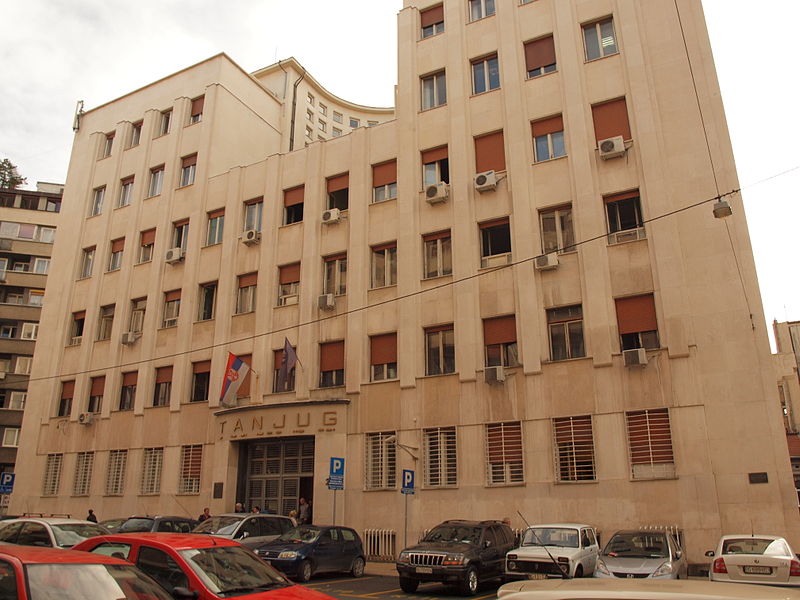
Pro-government news agency Tanjug has announced that media freedom in the countries of Southeast Europe is on the decline, except in Serbia – with reference to a survey of the clientelism index for 2016, which was presented on 7th March at a press conference in the Press Club Brussels.
English
16. apr 2018.
Vučić says he will no longer appear on public service until they guarantee not to quieten his tone
After Goran Vesić, a senior official of the ruling Serbian Progressive Party (SNS), claimed that he had his tone reduced while talking in a pre-election debate on Radio-Television Serbia (RTS), Serbian President and SNS leader Aleksandar Vučić threatened not to appear as a guest on RTS until they guarantee that they won’t also reduce the volume on him.
English
25. dec 2017.
LESKOVAC: Media barely surviving
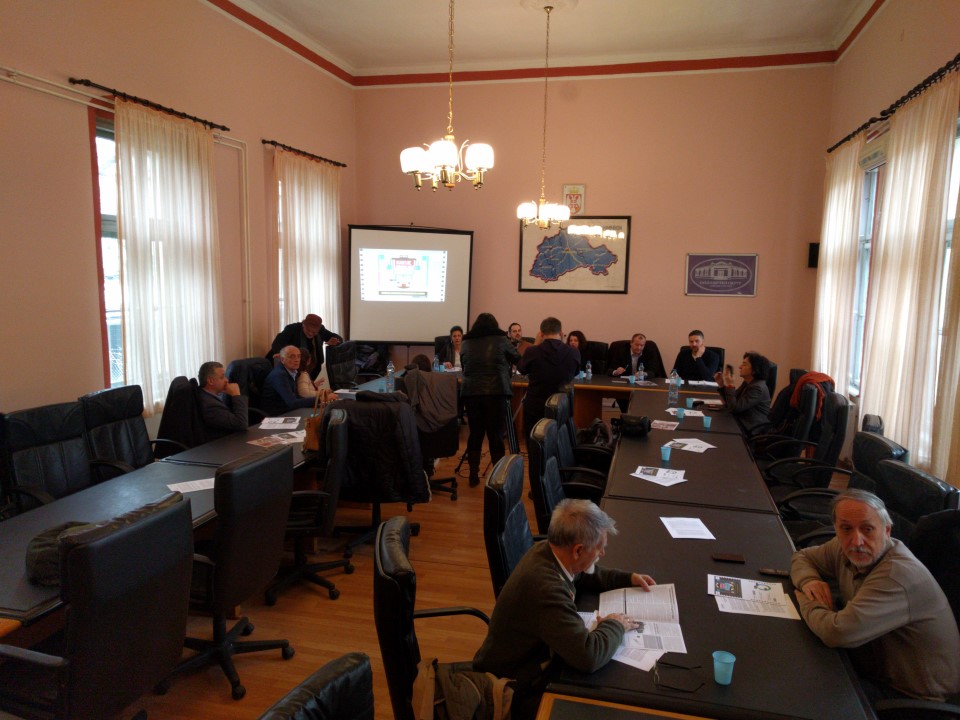
Media at the local level are not in a position to survive on the market, which is why most of them depend on project co-financing. Although this process is essential for the media, the conducting of contests have many shortcomings. In Leskovac as many as 19 media outlets received money through contests, which is the reason project co-financing has lost its purpose. The quality of projects is not considered in deciding. Capacities are weak when it comes to both media outlets and journalists.
English
13. nov 2016.
Serbia’s censorship debate – The Listening Post (Feature)
The Serbian government is pushing back against accusations of censorship by sponsoring a travelling exhibition of critical media content called „Uncensored Lies“. We went to take a look. All was not as it seemed.
English
08. nov 2016.
Serbia Tabloid Targets BIRN, Other Media, as ‘Mercenaries’
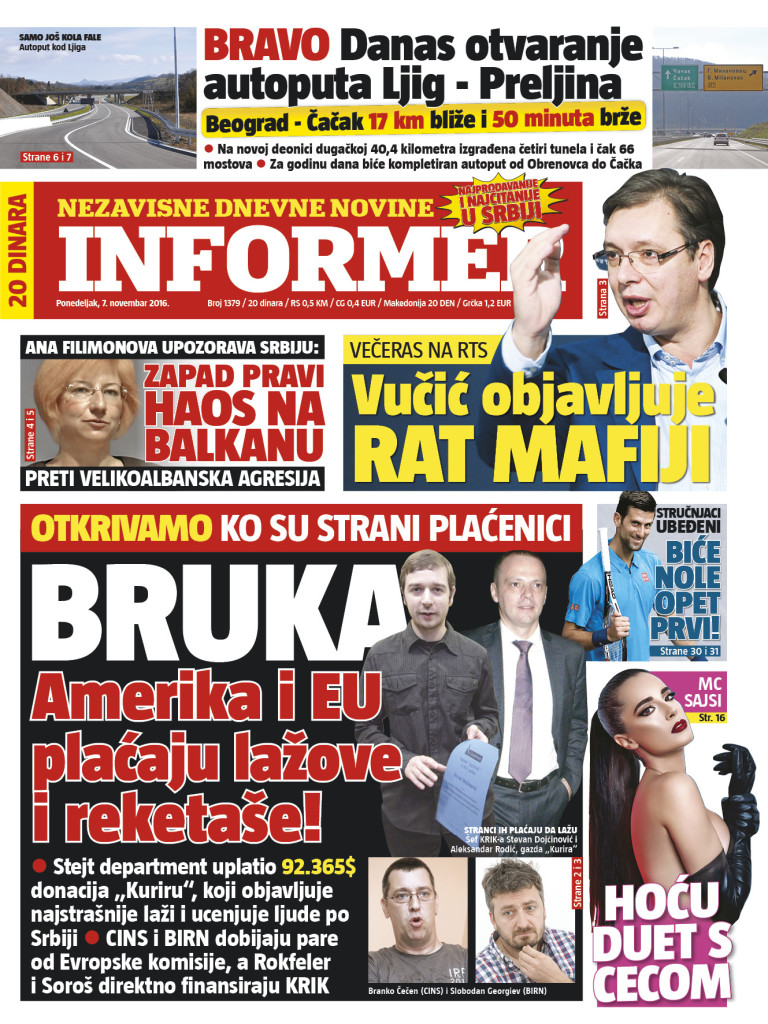
The Serbian pro-government Informer newspaper on Monday accused several investigative media outlets, including BIRN, of working as foreign mercenaries for the CIA and others
English
03. nov 2016.
Online Media in Serbia & Croatia: There is no Money, but there are Threats
Lack of money and aid, coupled with threats to journalists, are among the biggest challenges to online media in Serbia and Croatia, as shown by the results of a research conducted in 60 newsrooms (39 in Serbia and 21 in Croatia) by the Slavko Curuvija Foundation in Belgrade and the Association for Independent Media Culture…
English
03. nov 2016.
Center for Investigative Journalism of Serbia: Our Journalists are being Followed and Photographed
Four journalists of the Center for Investigative Journalism of Serbia (CIJS) noticed on several occasions in the past days different persons following them around the city of Belgrade and taking their photographs, CIJS claims
English
20. sep 2016.
Report: Journalists increasingly caught in the middle
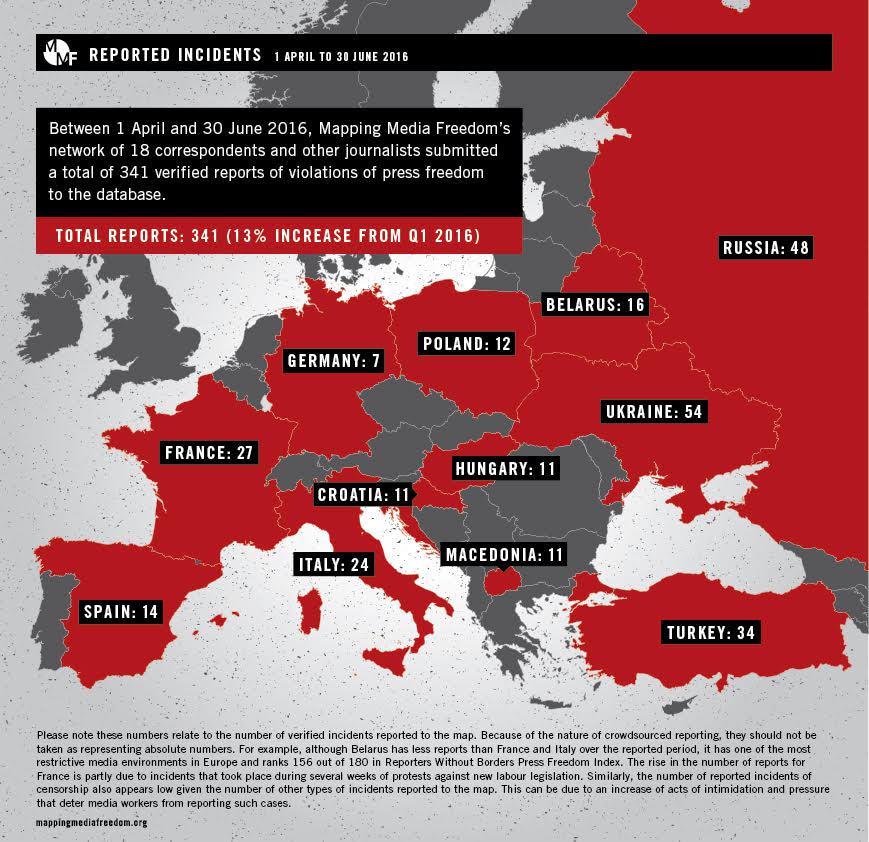
Violence against journalists in Europe increased in the second quarter of 2016, reports submitted to Index on Censorship’s Mapping Media Freedom platform show, as a government crackdown in Turkey intensified and protests turned violent in countries from France to Finland
English
27. maj 2016.
Serbia’s Controlled Media Are Ignoring Waterfront Protests
It is not surprising that most Serbian mainstream media either ignored or only selectively reported on a rally in which more than 10,000 marchers demanded resignations over the controversial demolitions in the Waterfront area
English
22. apr 2016.
Serbia’s independent media faces ongoing smear campaigns
English, Pritisci i napadi
11. apr 2016.
The murder of Slavko Ćuruvija, 17 years on: Will the truth ever be revealed?
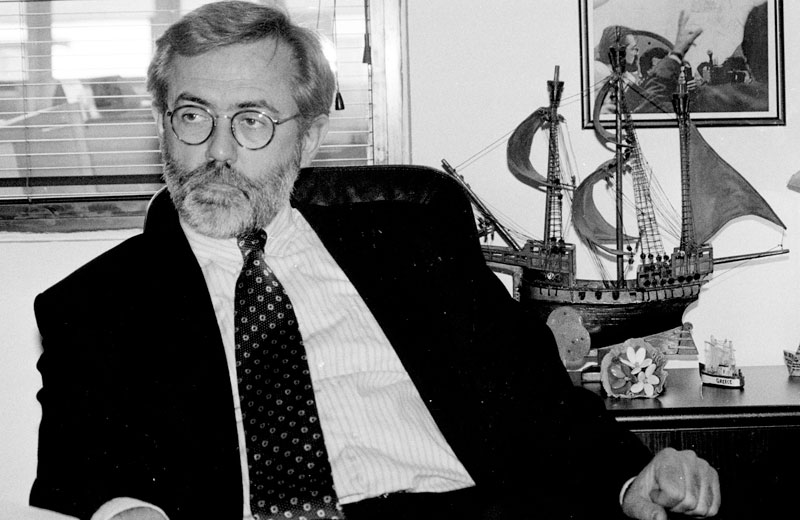
On 11th April we will mark 17 years since the murder of Slavko Ćuruvija, a renowned Serbian journalist and sharp critic of the Milošević regime. The trial of the four accused former members of the state security services only began in June 2015. To date only slightly more than a quarter of proposed witnesses have…
English
11. apr 2016.
Notable cases of journalists and media safety violations
First quarter of 2016 regarding safety of journalists and media in Serbia, beside “regular” threats and media campaigns against government critics, was marked by police interrogation of a reporter which alerted the public about unsafe drinking water and allegation about illegal police surveillance of journalists